A personal story about prompts, pixels, mistakes, and magic. 🎷✨
Let me tell you something — I spent an entire day in front of my screen, talking to AI tools, writing prompts, making mistakes, starting over, and honestly? I wouldn't trade it for anything. Because by the end of that day, I had created something I'm genuinely proud of: a short animated reel of an elegant illustrated saxophonist, playing a romantic melody with golden sparkles floating around him.
It sounds simple. It wasn't. But that's exactly what made it so satisfying.
It All Started With a Silhouette
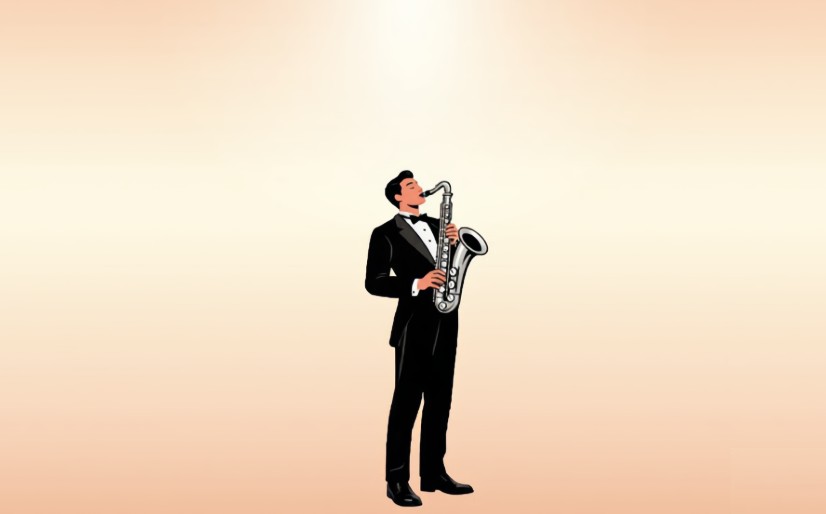
I had this image in my head — a jazz musician in a tuxedo, bow tie, playing his heart out, with musical notes drifting upward like little golden birds. Elegant. Minimalist. Romantic.
My first stop was ChatGPT with DALL-E. I typed my prompt, hit generate, and got... something close. Not perfect, but the bones were there. I tweaked the wording — added "flat 2D illustration," "Pixar-inspired," "soft beige gradient background" — and slowly, over a few tries, my saxophonist came to life on the screen.
One thing I learned quickly: the more specific your prompt, the better the result. Saying "a saxophone player" gives you something generic. Saying "an elegant jazz musician in a black tuxedo and bow tie, golden musical notes floating upward, soft beige and cream gradient background, flat 2D illustration, child-friendly, high quality" — that's when the magic starts.
Enter Luma AI — Dream Machine
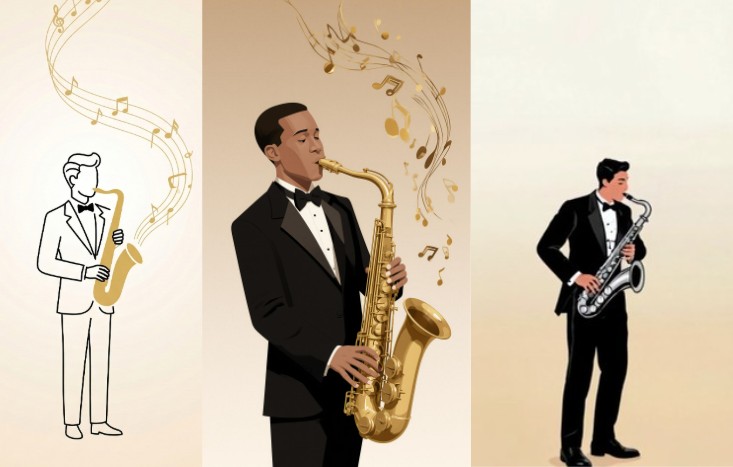
Once I had a beautiful static image, I wanted it to move. That's where Luma AI's Dream Machine came in. Dream Machine is a video generation platform that can take your image and animate it — bringing characters to life with smooth, natural movement.
Honestly? Luma surprised me. When I kept my prompt simple — just one character, one clear action — it delivered beautifully. I loaded my saxophonist image, wrote: "The saxophone player sways gently while playing. Smooth and elegant movement." And within seconds, he was moving. His body swayed. The scene breathed.
My biggest lesson with Luma: less is more. Short prompts. One character. Simple action. The moment I tried to add multiple characters or complex scenes, it got confused. But for a single animated character? It's genuinely impressive.
The Music — Yes, AI Can Do That Too
An animated saxophonist without music would just be... sad. So I went looking for the perfect romantic saxophone melody. I tried generating one with Suno AI, which is a fantastic tool for AI-generated music — you describe the mood, the instruments, the vibe, and it creates a full track.
My prompt was something like: "Romantic saxophone melody, instrumental only, no vocals, slow and tender jazz, smooth saxophone lead, soft piano accompaniment, warm and intimate, like a quiet evening in Paris." The results were actually beautiful — smooth, cinematic, emotional.
In the end, I found a perfect track right in CapCut's music library — licensed, royalty-free, and exactly the right vibe. Sometimes the simplest solution is the best one!
Putting It All Together in CapCut
CapCut is where everything came together. I brought in my animated video, added the romantic saxophone music, layered in some sparkle effects and soft light — and suddenly my little saxophonist had a whole atmosphere around him.
One thing I'd recommend: instead of trying to bake effects into your AI-generated images (like I first did with the golden musical notes), add them in CapCut instead. You get so much more control — over timing, position, opacity, and style. Professional video creators do this all the time: generate the character, animate the movement, add effects in post.
What I Learned After a Whole Day of Creating
Here's my honest takeaway from this whole adventure:
- The tools are not perfect — and that's okay. Every "mistake" taught me something about how these platforms think, what they're good at, and where they struggle.
- Prompt writing is a skill. The more you do it, the better you get. Specific, clear, layered prompts produce results that feel intentional.
- Use each tool for what it does best. ChatGPT/DALL-E for images. Luma or Kling for animation. CapCut for editing and effects. Suno for music. No single tool does everything perfectly.
- The creative process is the reward. There's something genuinely joyful about watching a still image come alive, about finding just the right music, about seeing your vision — however rough at first — take shape on the screen.
Why I Keep Creating
I make these little animated worlds because they make me happy. Because in a scroll-fast, noise-heavy world, I want to put something gentle and beautiful into the feed. A swaying saxophonist in a tuxedo. A mama cat and her kittens. A hedgehog with a basket of mushrooms.
You don't need to be a professional animator or a tech expert. You need curiosity, patience, and the willingness to try again when something doesn't work. That's it.
If this little story inspired you to try — I'd love to see what you create.